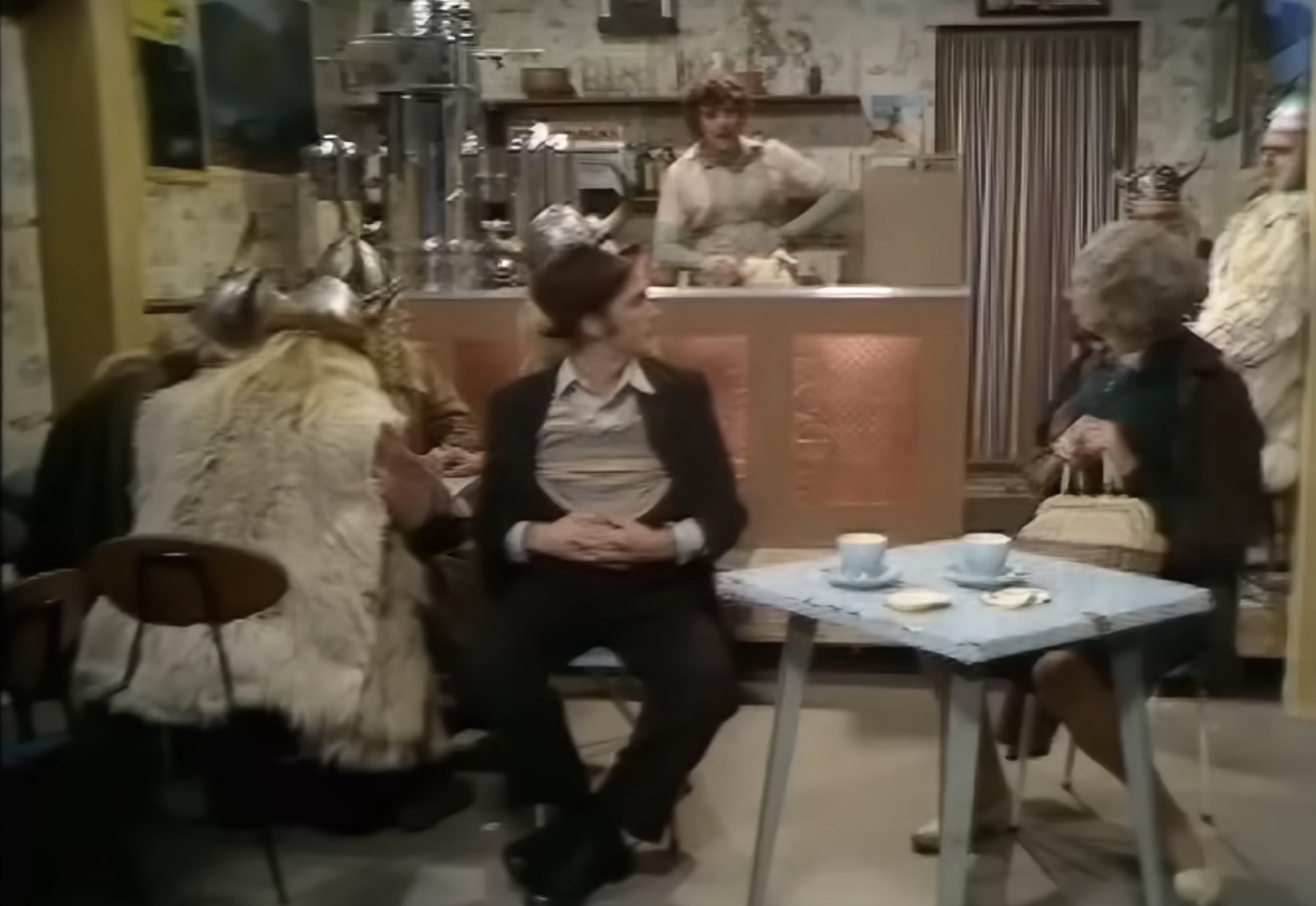
Picture a small café in rural England. A couple try to order breakfast, but the menu is... unusual. Every single dish contains Spam — the canned pork product. Spam and eggs. Spam and bacon. Spam, spam, spam, and eggs. And in the corner, a table full of Vikings won't stop singing about it.
"Spam, spam, spam, spam... SPAM, SPAM, SPAM, SPAM... lovely spam, wonderful spam!"
It's 1970. Monty Python's Flying Circus has just aired one of its most absurd sketches. Nobody watching could have guessed that this silly song about a processed meat product would, twenty years later, give the internet one of its most universally understood words.
First, the Meat
Before we get to Vikings and email, a quick word about the product itself.
Spam, the tinned meat, was introduced by the Hormel Foods Corporation in 1937. During the Second World War it became a dietary staple for Allied troops and rationed civilian populations across Europe, Asia, and the Pacific. It was everywhere. Inescapable. Whether you wanted it or not, Spam was on the table.
Which is probably what made it so funny to a group of Python writers in 1969.
The Sketch
The premise is beautifully simple. A husband and wife enter a greasy spoon café and attempt to order breakfast. Every item on the menu contains Spam, some dishes contain it multiple times. The wife doesn't like Spam. This, it turns out, is not a problem the café is equipped to solve.
While they argue with the waitress, a chorus of Vikings at a nearby table begins to sing, drowning out the entire conversation with an escalating, unstoppable chorus of "Spam, spam, spam, spam..."
The joke is the repetition itself. The word — cheerful, meaningless, relentless — overwhelms everything else. You can't escape it. It just keeps coming.
Sound familiar?
Here's the clip from YouTube
Enter the Internet
Fast forward to the 1980s. The internet is in its early, experimental phase — text-based bulletin boards, Usenet newsgroups, and early Multi-User Dungeons (MUDs) where communities of enthusiasts gather to discuss, debate, and occasionally cause mischief.
Some users discovered that flooding a chat or forum with the same message repeated over and over was a highly effective way to disrupt things. It crashed systems. It buried real conversations. It was annoying in the most spectacular way possible.
And someone — it's not entirely clear who, but the Python sketch was well known among the technically-minded communities of the time — started calling it spamming. The parallel was perfect. Unwanted. Repetitive. Impossible to ignore. Drowning out everything else.
The name stuck.
The First Real Spam Email
The term didn't attach itself to email immediately, but the behaviour did. The first widely recognised mass unsolicited commercial email was sent in 1978 by Gary Thuerk, a marketing manager at Digital Equipment Corporation. He blasted an advertisement to around 400 ARPANET users, essentially the entire accessible user list at the time.
The response was not warm. Complaints flooded in. Thuerk was reprimanded. And yet, somehow, this did not discourage the practice for long.
By the time the World Wide Web arrived in the early 1990s and email became a mainstream tool, the floodgates opened. The word "spam", already established in online communities, made the natural leap to describe unsolicited bulk email, and it's been part of everyday vocabulary ever since.
The Hormel Footnote
Hormel Foods, to their great credit, have largely taken all of this in good stride. They've occasionally grumbled about the association between their beloved product and digital nuisance, but they've never launched serious legal action over the use of the word. Their official position is essentially: we're fine with it as long as you don't confuse the two. The canned meat retains its capital S. The email nuisance stays lowercase.
It's a remarkably gracious stance for a company whose brand became synonymous with something universally loathed, through absolutely no fault of their own.
Why This Story Matters
There's something genuinely wonderful about the fact that one of the most globally recognised internet terms traces its roots to a 1970 BBC sketch about Vikings and tinned pork.
It's a reminder that the internet didn't arrive fully formed with its own language, it borrowed, adapted, and repurposed culture as it went. The people who built it were human beings with a sense of humour and a shared cultural vocabulary. When they needed a word for something relentless and unwanted, they reached for the most perfectly relentless, unwanted thing they knew.
And somewhere, a table of Vikings is still singing.